

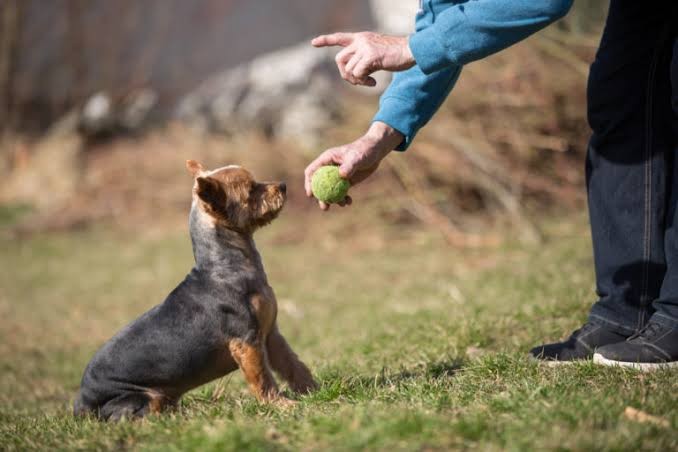
Dog owners have access to more training advice than ever. Search for help with pulling, barking, jumping, or recall, and you can find dozens of suggestions before finishing a cup of coffee.
That sounds useful until the advice starts contradicting itself.
An owner tries one approach on Monday, watches another video on Wednesday, and changes direction again by the weekend. Meanwhile, the dog is receiving a slightly different message every few days.
Trying new ideas is not necessarily a problem. Constantly changing the rules before the dog has had a fair chance to understand them can be.
Begin With the Problem in Front of You
“My dog doesn’t listen” is difficult to work with because it covers almost everything.
Try describing one actual moment instead.
Maybe the dog responds well indoors but ignores a recall in the garden. Perhaps it walks comfortably until another dog appears. It might stay calm with family members but jump whenever somebody new comes through the door.
Once the problem becomes specific, the training goal becomes clearer.
This also makes it easier to judge whether something is improving. You are no longer trying to create a generally “better” dog. You are working on a situation you can actually observe.
Understand Why an Exercise Is Being Used
Following instructions without understanding them can become frustrating.
Suppose somebody tells an owner to practice waiting at the front door. Knowing the reason behind that exercise makes it more useful. The dog is not simply learning an impressive trick. It is practicing a manageable response in a place where excitement often occurs.
The same applies to attention exercises, loose-leash walking, recall, and settling.
People searching for the best dog training in austin may want to consider whether training also helps the human understand what they are doing. An owner who understands the purpose behind an exercise is better equipped to use it when the trainer is no longer standing nearby.
Give a New Skill Time to Settle
Dogs need repetition.
A behavior that worked three times this morning is not automatically reliable everywhere. The dog may need to practice it in another room, outside, and eventually around distractions.
Moving too quickly can create the impression that the method stopped working.
Imagine teaching a dog to remain calm around another dog from fifty feet away. After two successful attempts, immediately reducing that distance to five feet is a huge jump in difficulty.
If the dog struggles, the original work was not necessarily wasted. The next step may simply have been too large.
Learn the Basics Before Chasing Solutions
Sometimes owners collect techniques without having a clear foundation for using them.
They know several commands but are unsure about timing. They have heard about reinforcement but cannot tell which everyday actions are accidentally encouraging unwanted behavior.
A dog training orientation class can help owners learn about canine communication, how dogs learn, behavior modification, housebreaking, crate training, and other fundamentals before tackling more complicated situations.
That background can make future training decisions less confusing.
Instead of asking, “Which trick should I try next?” an owner can begin asking, “What is my dog learning from what happens here?”
That is a much more useful question.
Keep the Household on Roughly the Same Page
Even a good plan becomes difficult when everyone follows different rules.
One family member asks the dog to sit before receiving attention. Another encourages jumping. Somebody feeds scraps at the table while somebody else is working on reducing begging.
Dogs notice what gets results.
Families do not need military-level precision, but agreeing on a few important expectations helps. Decide how greetings work, which cues everyone will use, and what behaviors should earn access to things the dog wants.
Clear rules reduce guesswork.
Review Progress Before Changing Direction
Give yourself something measurable to watch.
If the dog used to bark for two minutes when someone arrived, does it now settle after thirty seconds? If pulling happened throughout the walk, are there longer stretches of loose leash?
Improvement can exist even when the final goal has not been reached.
If nothing changes after consistent practice, then the plan may need adjustment. But changing methods every couple of days makes it difficult to know what was actually helping.
Sometimes patience provides information too.
Conclusion
Successful dog training does not require owners to chase every new piece of advice they encounter. Understanding the problem, learning why an exercise is being used, practicing consistently, and watching for gradual improvement can provide a much clearer path.
A solid foundation also helps owners make better decisions when new challenges appear. Those interested in professional instruction and owner-focused education can visit caninemoxy.com to learn more about its available dog-training services and approach.
