

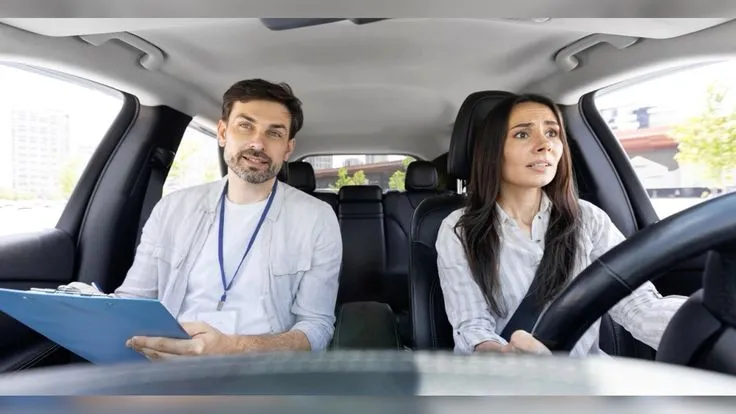
Knowing how to start and stop a car is not enough preparation for a driving test. Richmond students should be able to learn what to do, how to react to traffic conditions, and feel at ease making decisions when driving. Good preparation should start before an appointment has been set, allowing learners adequate time to recognize areas of difficulty and to practice these areas well. A systematic method can help manage the process more easily and encourage the students to have habits that will still help them long after they are licensed.
Understand the Test Requirements
Students must review the specific requirements of the Texas Department of Public Safety (TX DPS) that apply to their specific licensing situation prior to preparing for a driving test Richmond TX. Requirements may vary by age, type of license, previous experience, and other factors.
Don’t just trust information given to you by friends or older discussions online. There may be changes in testing procedures, documentation requirements and appointment information.
By gaining an understanding of the process early in the process, students can prepare for the requirements that are relevant to them.
Build Consistent Vehicle Control
Complicated traffic practice should not be achieved until good vehicle control is developed. Pupils will need to be familiar with acceleration, braking, steering, stopping, signaling and lane positioning.
Take your time, do your movements smoothly. Controlled braking and steady steering will help make the vehicle more manageable for the learner to manage and allow them to focus on the traffic around them.
Students should also be familiar with various controls such as lights, indicators, and mirrors. These controls are located so that this allows them to operate without distraction.
Improve Observation Habits
A student who wants to take a practical test must pay attention to more than the road in front of him. Forward scanning and regular mirror checking can help see changes in traffic earlier.
Be aware of pedestrians, cyclists, parked vehicles, signs, traffic signals, and vehicles approaching from various directions. Anticipate traffic conditions and road changes by looking ahead.
One of the key elements of good observation is knowing what the next move of other road users might be. Students should be conscious, but not so conscious that they’re anticipating all movements.
Practice Common Driving Situations
As Richmond students grow their abilities, they should get practice in a variety of road environments. Residential streets can offer a good starting point for students before moving onto larger streets and heavier traffic intersections.
Turns, lane changes, controlled stops, parking, backing up and maintaining proper speed should be practiced. The movement should be repeated, but whilst concentrating on what is being done and how it is done, not just that it is done.
With only one skill being inconsistent, practice that skill, rather than rush on.
Use Professional Instruction
Drivers ed Richmond TX can offer valuable learning, especially for those who are still acquiring the rules and obligations of driving.
The knowledge can then be reinforced through practical instruction to link it with actual road situations. The teacher can judge students’ steering, braking, lane positioning, signaling and traffic awareness.
Professional feedback is useful as learners can’t always detect habits that the professional can detect on the spot. Providing focused feedback can help practice be more focused.
Practice Independent Decisions
In early lessons, pupils can rely heavily on guidance from an instructor/supervising driver. As they get better, at the right time, they should increasingly begin to understand situations and make their own decisions.
For instance, students need to know when to slow down, when to change lanes and how to navigate an intersection without needing constant reminders.
This will begin to familiarize students with driving in a situation where they don’t have an instructor telling them what to do.
Prepare Before Appointment Day
Avoid last-minute preparations. Weak skills should be practiced on a regular basis, and current skills, appointment and vehicle requirements should be double-checked in advance.
Ensure that relevant documents and other necessary arrangements are made prior to test day. Make sure there is ample travel time for unexpected delays so they do not cause unnecessary pressure.
Take note during the evaluation, when instructions are given, and when focusing on the task, even if you make a slight mistake. A bad moment doesn’t have to trouble you with the rest of the trip.
Conclusion
Students at Richmond schools can improve their skills in preparing for the DPS road test through a mix of driver education, practice driving, observation and independent decision-making. First introducing the idea of controlling the vehicle and then slowly moving into more advanced traffic situations can help to build a sense of foundation. Professional advice may also help determine areas that may require extra consideration before the appointment. When choosing the right driver education and practical test training, Myfirstdrive.net may be considered if you’re interested in finding local driver education/practical test preparation.
