

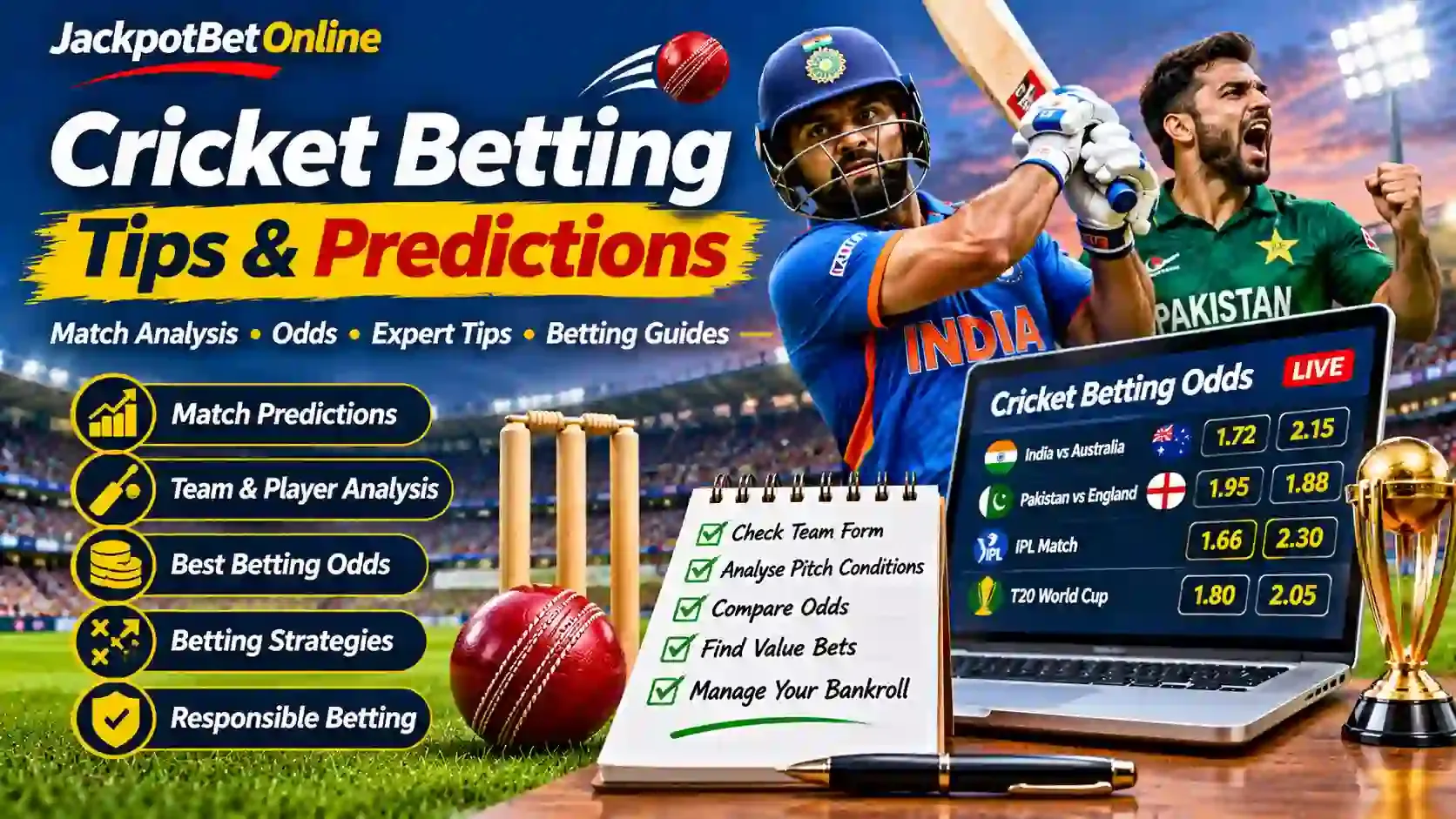
Start With Market Discovery, Not Guesswork
Before you place a bet, scan the board for alternative markets like top batter, top bowler, or Cricket betting tips innings totals. These options often reflect match dynamics more precisely than a broad “win or lose” selection. When you understand the range of betting angles available, you can match your analysis to the right market.
Brand discovery matters because it shapes how you learn the sport and how you interpret odds. A reputable site can explain why certain markets react to team selection, pitch behavior, and batting depth. That learning process is especially useful for beginners who may not yet recognize how powerplays, death overs, or new-ball swing influence the numbers. With better discovery, you spend less time guessing and more time building a consistent decision workflow.
Analyze Form, Matchups, and Roles That Drive Results
To build informed match predictions, focus on the factors that consistently drive cricket outcomes: recent form, head-to-head patterns, and player roles. Look at how a team’s batting lineup is structured, including who anchors innings and who accelerates during key phases. A batter with a stable strike rate and a reliable boundary count can be more predictable in “top batsman” markets. Meanwhile, bowlers who consistently take early wickets can create value for “top bowler” and over-based selections.
Matchups also deserve attention, especially in limited-overs formats where specific bowling styles face specific batting weaknesses. For example, a team that leans on spin during the middle overs may perform differently when the pitch grips or when batters struggle to clear the infield. Similarly, pace bowlers who generate seam movement can change how totals are set for the match. When your analysis ties roles to likely ball-by-ball scenarios, your betting approach becomes more grounded.
Squad changes and injuries influence betting markets more than many people expect, particularly in cricket where one missing specialist can alter the batting order. If a key bowler is ruled out or replaced, overs distribution may shift, affecting death-over totals and over/under run lines. Even small adjustments—like promoting a finisher up the order—can change the timing of risk. Use team news and squad announcements to update your assumptions rather than betting on outdated shapes.
Use Conditions: Pitch, Weather, and Game Script Signals
Pitch conditions and weather forecasts are essential for refining cricket match predictions, because they affect scoring pace and wicket patterns. A dry, slow surface typically rewards batters who can rotate the strike and punish loose balls, while a greener wicket can expose technical gaps early. If the ball is expected to move in the first innings, “top bowler” and early-wicket markets tend to become more relevant. Understanding the game script potential helps you choose the right bet type for the environment.
Weather can also shift match dynamics through cloud cover, humidity, and rain interruptions that affect overs and target calculations. Even when a match is completed, conditions can reduce swing or increase skid, changing how quickly batters can find boundaries. Those adjustments matter for markets like total runs, innings totals, and over/under lines. By translating conditions into probable scoring behavior, you can avoid selecting markets that don’t fit the likely match pattern.
Another overlooked signal is how teams usually approach the format. Test cricket rewards patience and long spells, so wicket-taking and session-by-session momentum can matter more than short-term volatility. In T20 tournaments, powerplay tactics and death-overs execution often decide the margin. When you align your expectations with the format’s typical scoring pattern, your selections are less random and more coherent. That coherence is exactly what strong brand discovery resources aim to teach.
Pick Markets Strategically: From Totals to Live Angles
Instead of treating every bet as equal, separate markets by what they measure and what they depend on. Match winner bets are broad and can be influenced by one-off performances, while totals and innings totals are often more sensitive to conditions and batting depth. If you expect a pitch to slow down and wickets to fall at regular intervals, over/under run lines and innings targets can reflect that more directly. If you expect explosive batting in specific phases, highest opening partnership or top batter markets may better capture your thesis.
In-play markets can react to early wickets, batter dismissals, and changing over pace, which can quickly invalidate pre-match assumptions. Live angles work best when you already understand the likely match script, so your adjustments are based on observations rather than emotions. For example, if the openers get through the powerplay with minimal risk, you might reassess a “top batsman” selection tied to early confidence.
Bankroll management completes the strategy because even well-researched picks can lose in cricket’s high-variance environment. A responsible approach helps you avoid overexposure to a single game or a single market type. Consider using smaller stakes for exploratory selections and larger stakes only when your analysis aligns strongly with the conditions and team roles. Comparing odds across bookmakers can also improve value, since similar markets sometimes carry different prices. Over time, value-focused discipline can matter more than chasing headlines.
Conclusion
When you combine role-based analysis, matchup logic, and weather or pitch signals, your predictions become easier to explain and harder to dismiss. That clarity is a big part of why strong brand discovery experiences can improve how fans learn and bet responsibly. Use credible match previews and betting guides to refine your decision-making, but remember that no prediction model can guarantee profit. Cricket involves uncertainty through form swings, moment-to-moment tactics, and unpredictable wicket events. If you focus on learning, value, and responsible wagering, you’re more likely to build a sustainable approach across formats like T20, ODI, and Test cricket. Explore insights, compare options, and place bets only when the reasoning behind your selection is solid.
