

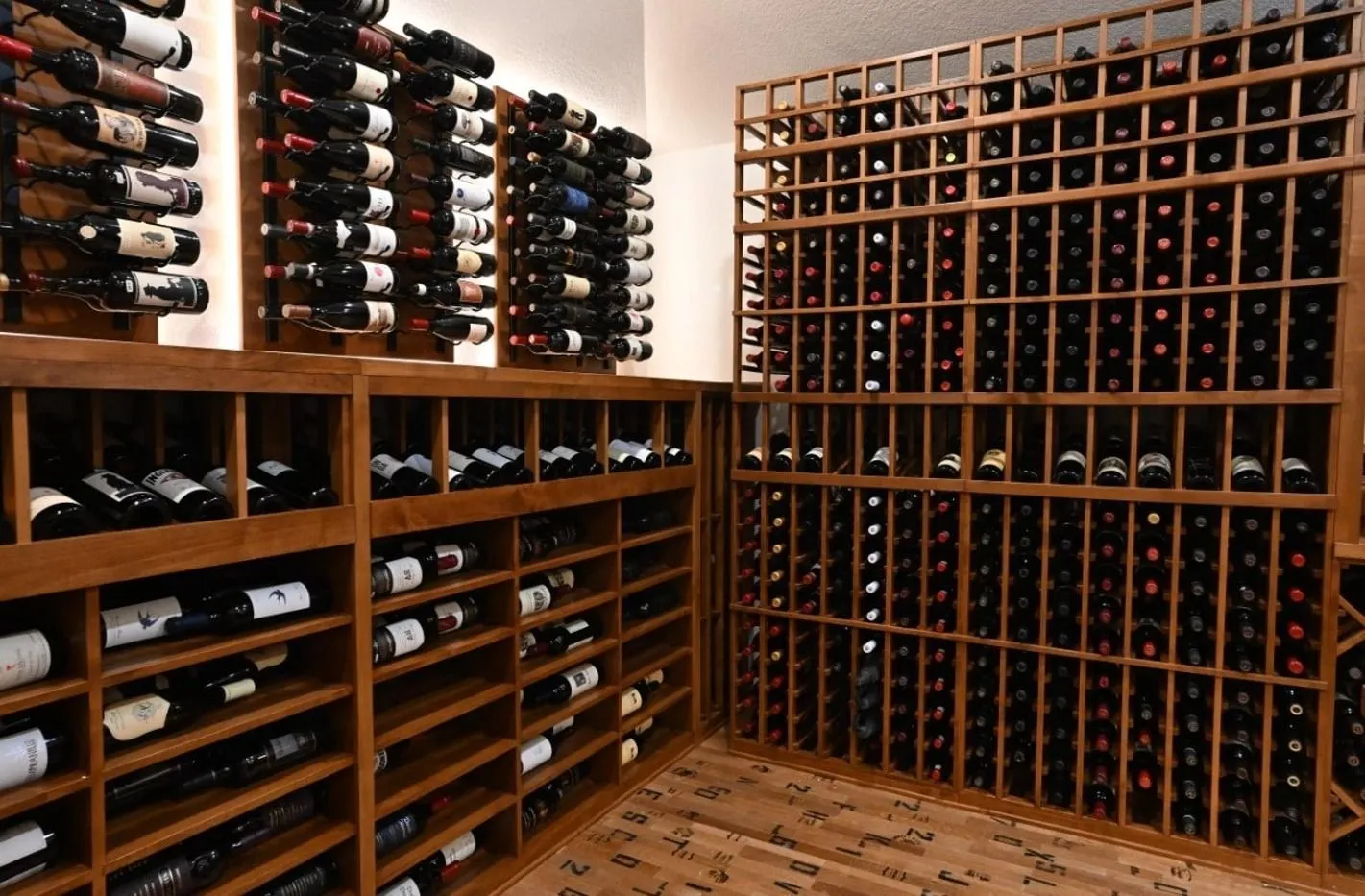
Most cellar regrets start on paper, not on site. Someone falls for a photo, hires a carpenter, and learns three months later that the room runs warm or the shelving holds half of what they pictured. Working through these wine cellar design considerations first, before a single stud goes up, costs far less than fixing mistakes behind finished drywall and fresh paint, and it keeps the whole project calmer.
Count the Bottles, Then Walk the Space
Count what you own, then add about a third. Collections grow quietly, and a cellar sized to today’s inventory feels full within two years. Be honest about formats too, because magnums and oversized Burgundy bottles need bigger openings than a standard grid offers, and mixing them in later is awkward and expensive.
Next, walk the room with a tape measure in hand. Pipes, ductwork and low beams decide where racking can run and which way a door can swing. Photograph every obstruction and every outlet, so whoever drafts the layout sees exactly what you see when you stand there on a quiet afternoon.
Racking That Fits the Way You Pour
Shelving is where daily habits meet style. Bottles should lie nearly level so the wine keeps the cork damp, and the frame has to carry real weight without flexing. Good custom wine racks are sized to your own bottle mix, so nothing wobbles, nothing jams when you reach in, and the labels stay easy to read.
Pick materials with your taste in mind. Hardwood brings warmth, metal looks thinner and cleaner, and cable systems make bottles seem to float. Mixed setups are common, with solid wood low down for full cases and lighter metal above for the bottles you want to show off, which keeps the room interesting without feeling busy.
Climate, Insulation and Moisture
A cellar is really a small refrigerated box, so the walls have to behave like one. Closed-cell foam, a continuous vapor barrier and a tight door seal keep cold air in and damp air out. Skipping the barrier is the classic cause of mold hiding behind the wall, and by the time anyone smells it, the damage is already spreading.
Aim for roughly 55°F and humidity between 60 and 70 percent. Have the cooling load calculated for your actual room instead of choosing a unit by BTU count alone, since lighting, glass and a busy doorway all change the math in ways that a catalog page simply can’t predict for your particular house.
Light, Floor and Finish
Light should show off labels without warming anything nearby. Cool-running LEDs are the norm now, and dimmers let you slide from a bright tasting mood to a soft evening glow. Keep anything that throws heat well away from the bottles and the racks, because even a small warm spot can shorten the life of a good wine.
Floors face humidity and the occasional spill. Tile, stone and sealed cork all cope well, while ordinary hardwood tends to cup over time. Choose the surface before the racking is ordered, so the colors and textures are decided together instead of fighting each other once everything is finally installed and the room is finished.
Set a Budget You Can Defend
Split the budget into the parts you can’t cheap out on and the parts you can. Cooling, insulation and the door sit in the first group, since a failure there ruins everything else. Decorative touches belong in the second group, and they can often be added later, once the first round of spending is behind you.
Leave ten percent aside for surprises. Hidden wiring, uneven slabs and permit questions turn up more often than anyone expects, and a small cushion keeps the whole project from stalling halfway through while you wait on a decision or an invoice. It’s much easier to return unspent money than to find extra.
Final Thoughts
Answering these questions on paper turns a vague wish into a brief that a builder can price accurately. If you’d like a second opinion on your plan, the team at customwinecellar.com can look over your space, talk through your collection and explain the sensible next move without any pressure.
Take your time with the early decisions. A calm, well-thought-out plan almost always produces a cellar you’ll still love long after the collection has doubled and the guest list has grown along with it, and that’s really the whole point of planning ahead in the first place.
